Access to asylum
In Greece, accessing the asylum procedure has become an obstacle course shaped by technical barriers, restrictive policies and chronic under‑provision of services. Online platforms are often unusable, interpretation services are intermittently suspended, registration may be arbitrarily restricted, and asylum seekers are frequently held in remote, closed or semi‑closed facilities with little or no access to legal support. These practices result in people being unable even to lodge an application or to understand the nature and consequences of the procedures they face.
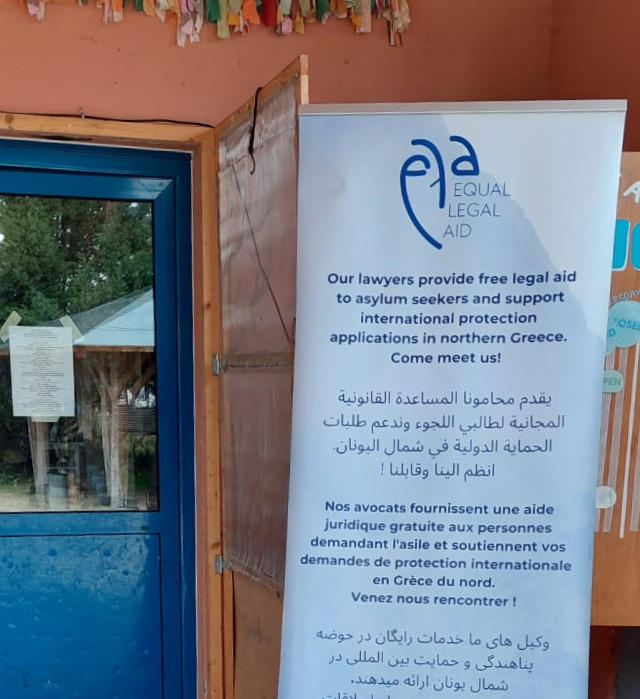
Legal clinic, 2026 © Equal Legal Aid
Delivering quality legal assistance, at the right time, in the right place:
ELA’s work on access to asylum addresses these obstacles at their source. We ensure that displaced persons in northern Greece receive accurate, timely and comprehensible information on the asylum system, their rights and obligations, and the procedural steps they are required to follow.
Our programme is deliberately mobile and demand‑driven. Community outreach, legal information, and the operation of a dedicated hotline are organised so that people can reach a lawyer even when they cannot leave their accommodation, face mobility restrictions, or are transferred between facilities with little notice. In a context of rapid processing, short deadlines and frequent changes in practice, this design allows ELA to intervene at the earliest possible stage, reducing the risk that applicants are excluded from the procedure or deprived of essential procedural guarantees simply because they did not have access to information or support in time. By investing in outreach and legal literacy in the communities we serve, and by maintaining an “open‑door” approach within the limits of our resources, ELA’s work on access to asylum mitigates the deliberate and structural barriers that currently prevent displaced persons in Greece from exercising their right to seek protection.
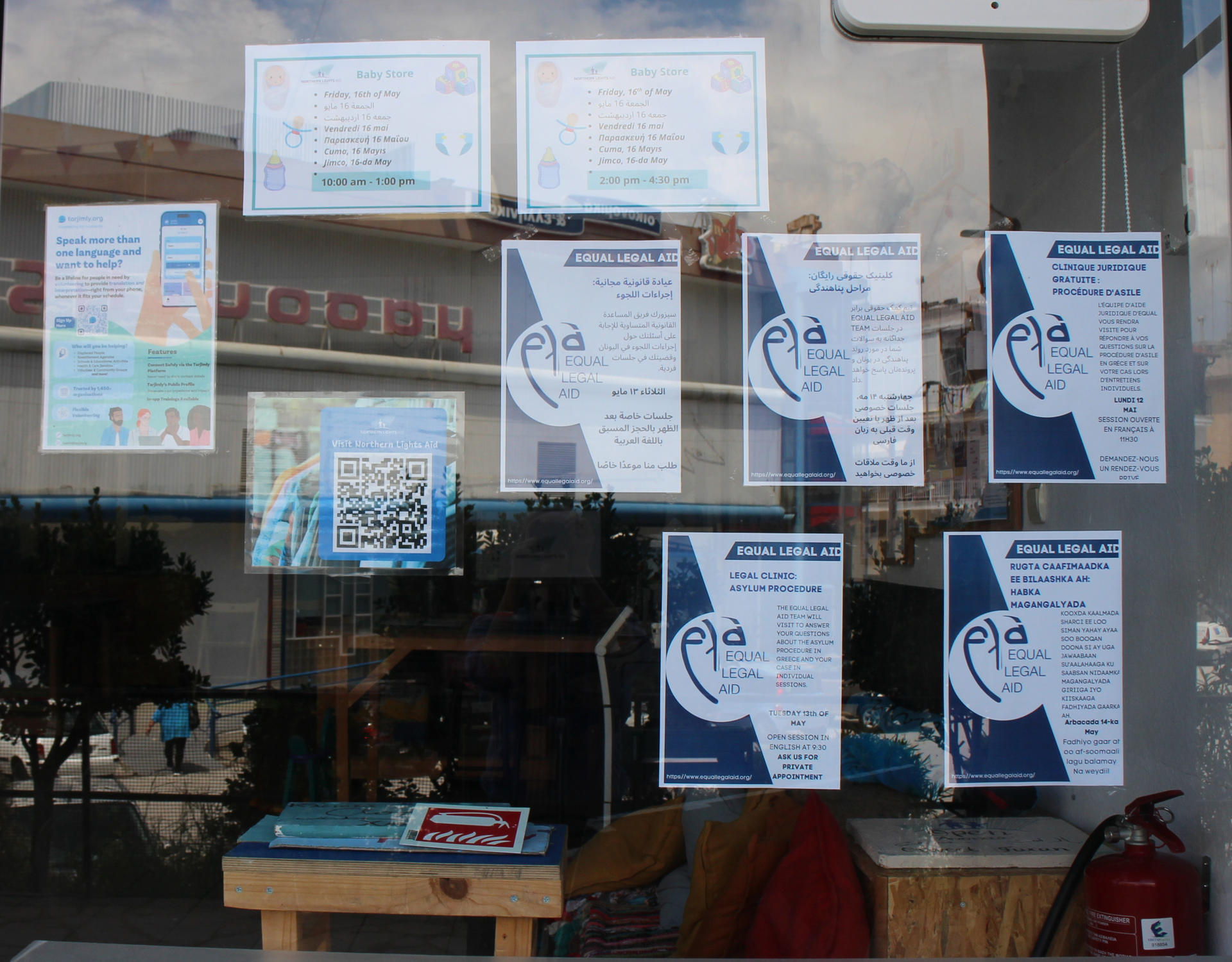
Legal clinic in Kavala, 2025 © Equal Legal Aid